Horror at Your Table
Early on in of Hearth and Horror’s development, we knew we wanted to build a TTRPG experience that prioritizes horror, survival, and high-stakes choices. Initially, this was a challenge for us since so much of horror is based on the agreements between the players and the Conteur’s ability to tell a horror story. While the vibe in of Hearth and Horror still benefits from players and Conteurs agreeing to engage with fear, we worked hard to design of Hearth and Horror’s mechanics to radiate survival-horror, while still maintaining the flexibility of an RPG experience. In this week’s Dev Diary, let’s talk about bringing fear to the table.
We have always been massive survival-horror fans, particularly in the gameplay stylings of the Resident Evil franchise and their associated board games. The games’ insistence on inducing dread, through the player’s attempts at choosing the best path forward, envelops the player as they are faced with dire decision after dire decision - is it better to clear this monster-filled hallway with my remaining bullets, or sacrifice some health to barrel past? It dawned upon us that this inherent fear of “will I be able to make it?” can become “do I have enough resources to make it?” as resources continue to fall through the cracks. Through endless discussion, we decided to root of Hearth and Horror’s gameplay in the risks and high stakes associated with resource management and an atmosphere designed to evoke the essence of survival-horror.
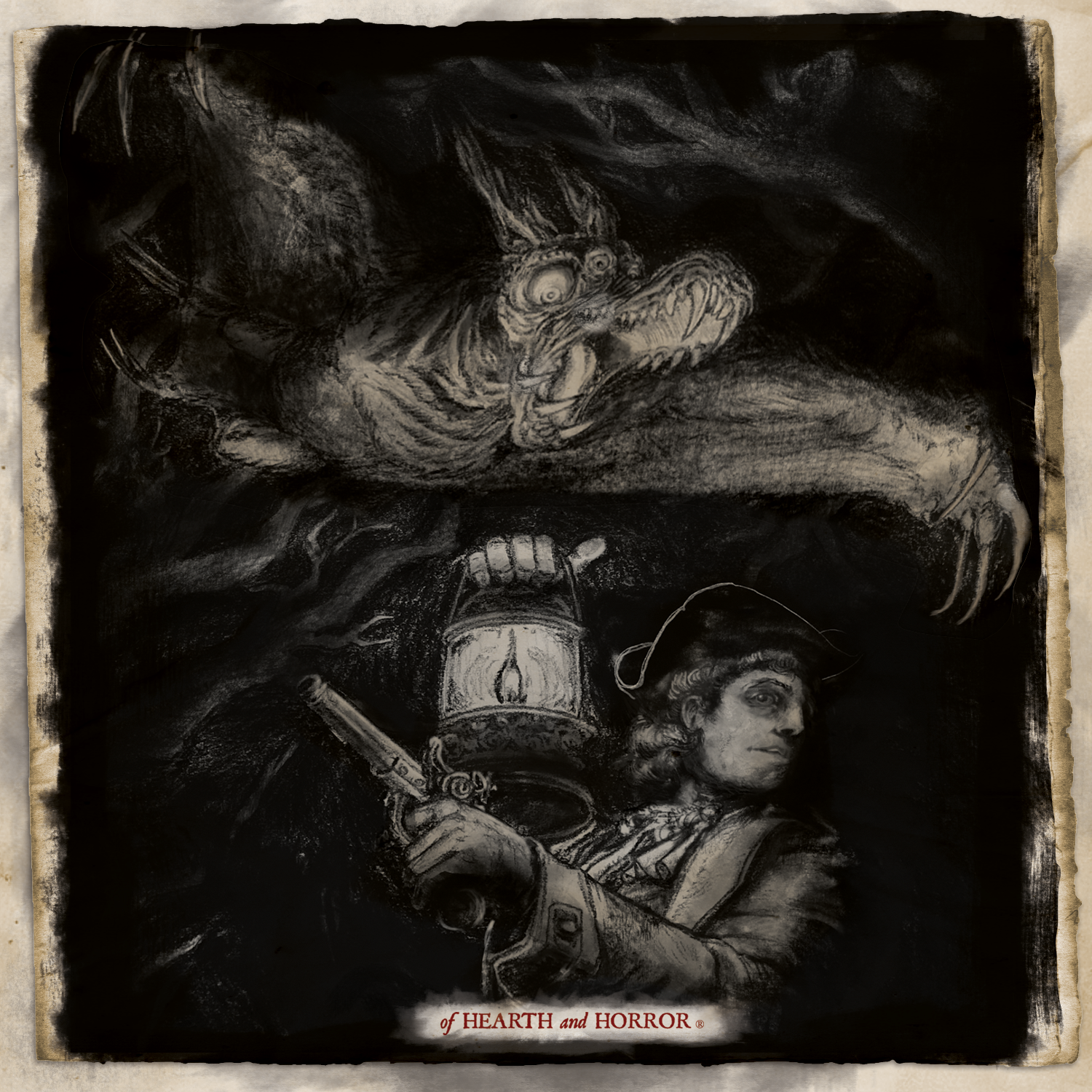
A Wickeater descends upon an ill-lit flame
Resource management is a key factor in nearly every survival-horror story. With of Hearth and Horror, this quickly developed into our core focus on costs. Whether that cost is food and water, the individual items in your pack, or your Character’s health, every game action taken comes at some sort of cost to the players. These range from simple costs, such as expending a musket ball and powder to shoot down a rampaging Abomination, to more dire ones, such as suffering a major wound after failing to jump over a gap. Decision-making throughout of Hearth and Horror, and their consequences based on how successfully you roll, centers around expending something, and managing the successive anxiety of consistently dwindling resources. A core mechanic that of Hearth and Horror hinges on is the idea of each Character’s Sanity as one of these expendable resources. Stay tuned for more on Sanity in one of our next Dev Diary entries.
In many TTRPGs, there is a “hero’s power fantasy” that builds up as characters grow, eventually leading to cases where it can feel hard to truly fail. While these power fantasies can definitely be fun, it often comes without lasting consequences that cannot be resolved overnight. This led to our second core horror belief: managing player empowerment. In survival-horror, there is a middle ground between being overpowered (like in Resident Evil 5) and being unable to defend yourself (as in Outlast) that creates a Goldilocks effect with the question of “Do I have enough to overcome this?” of Hearth and Horror’s character development system was designed around this very question, and while you are able to unlock special abilities that feel powerful and game-changing, we aim to keep high stakes and danger elevated in our system so players get the feeling of becoming powerful without becoming over-powered. This key, fearful question should always linger in of Hearth and Horror’s gameplay. You can only overcome The Uncharted with preparation and teamwork, or you can run away. Going in ‘guns blazing’ is still an option, but we wanted to put a higher emphasis on the brutality and risk of these choices when they are not fully thought out and coordinated.
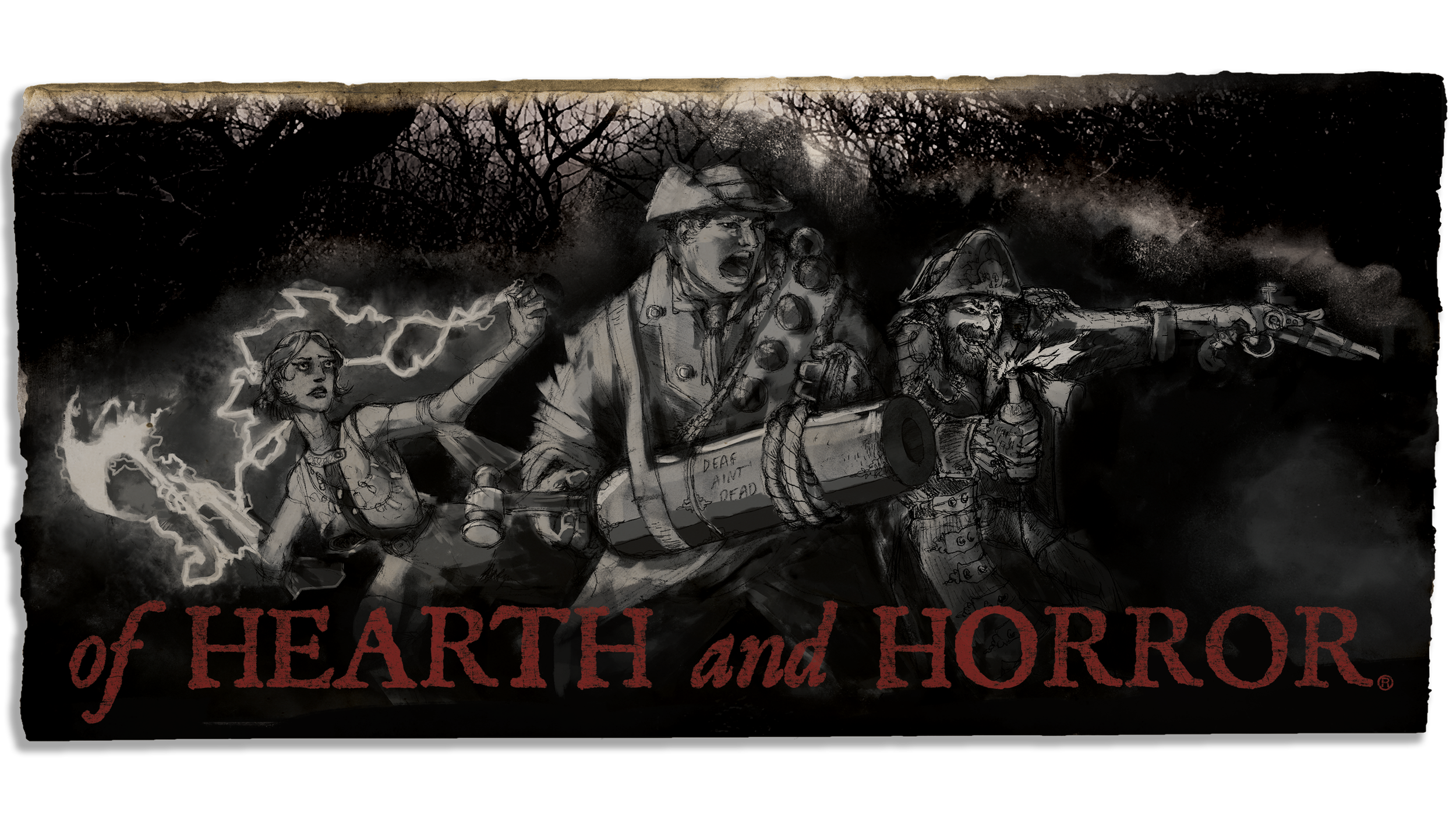
Killimanj, Bellamy Toll, and Iago Bandersnatch unite to stave off a horde of Abominations
Player engagement and willingness to dive into horror will always be a key component to any tabletop survival-horror game. While of Hearth and Horror can be played in any preferred genre (we have definitely had our fair share of laughs while playing), we sought to create a lingering, dread-filled atmosphere throughout our game design, in order to cement players and Conteurs, alike, into a persistent survival-horror mindset.
In order to make this theme come to life, of Hearth and Horror’s Player’s Almanac is designed to look like a field journal cobbled together by a group of unlucky explorers. It is filled with hand-drawn original Abominations and landscapes in what appears to be hastily-produced charcoal. The book is presented with cut outs, art smudges, and bloody streaks to make it feel like a print version of found footage that endured endless disaster. While engagement with the horror comes down to agreements made during each table’s session 0, we aim to provide players with all the tools to persist through the fog of dread.
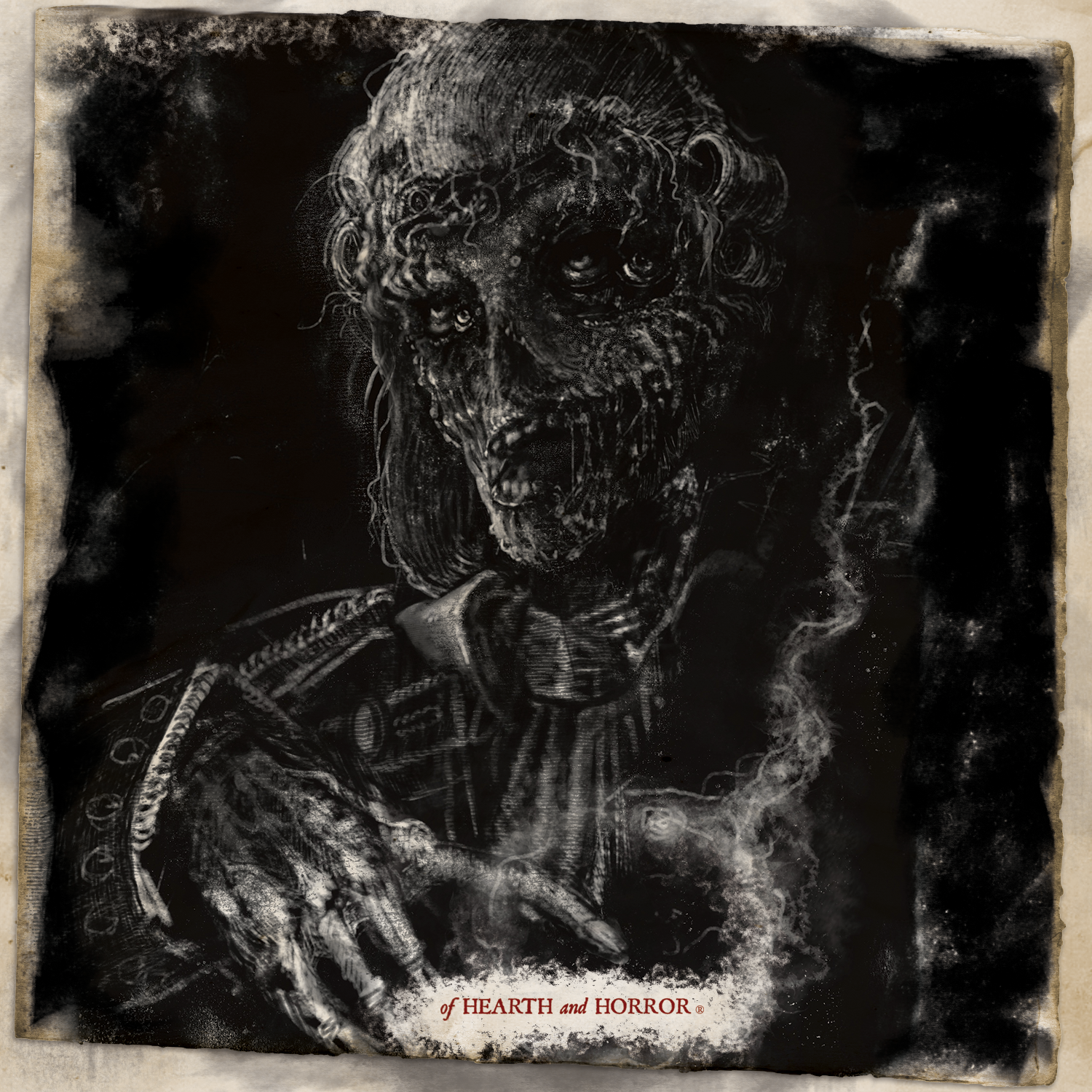
An Eldritch Lord lies in wait with nothing but their Augury to keep them company
We look forward to diving deeper into the horror with you soon. Until our next diary entry…